
Geotechnical engineering libraryContact
Earthquakes act as triggers for several of the mechanisms above, and they also introduce mechanisms of their own: liquefaction of loose saturated granular soils, lateral spreading toward free faces, cyclic softening of soft clays, and seismically induced slope failures and rockfall. Evaluate these using Chapter 6.5. After a felt earthquake, the railroad's earthquake notification protocol (Chapter 1.1, Section 1.1.8) sets the inspection radius and speed restrictions.
Profillidis treats earthquakes in two parts: designing structures, track and subgrade for the regional design acceleration (up to about 0.3 g in his text), and protecting trains during an event. For the second, accelerometer sensors in protected housings along the line report to an alarm center:
These values describe one European system and can be compared with client post-earthquake inspection protocols (Chapter 6.5).
After Profillidis (2014), §9.17. Full reference under Supplemental References.
More than 1,500 seismic events are recorded in Canada each year, with a significant one every two to five years. Energy travels farther through dense eastern Precambrian rock. The 1935 Temiskaming M6.2 earthquake caused an embankment failure more than 220 mi from the epicenter. The 1988 Saguenay M5.9 event temporarily liquefied a muskeg zone and triggered nine slope failures; derailments were avoided only because the track was closed. In a 2010 event, straight rail was left kinked into S-curves, buckled at ties and disturbed at culverts, damage not visible from a moving train. Post-event inspection must cover track and roadbed, drainage, culverts, retaining walls, tunnels, overpasses, bridges and approaches, adjacent buildings, fiber and utilities, and signals. Response criteria are in Chapter 6.5.
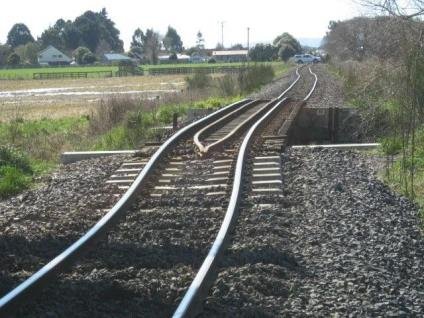
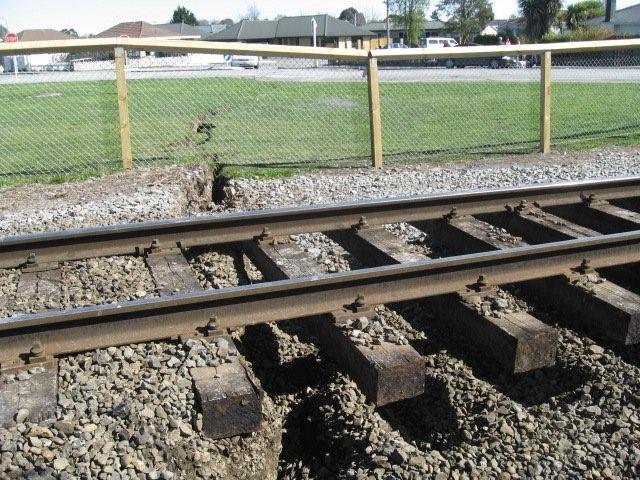
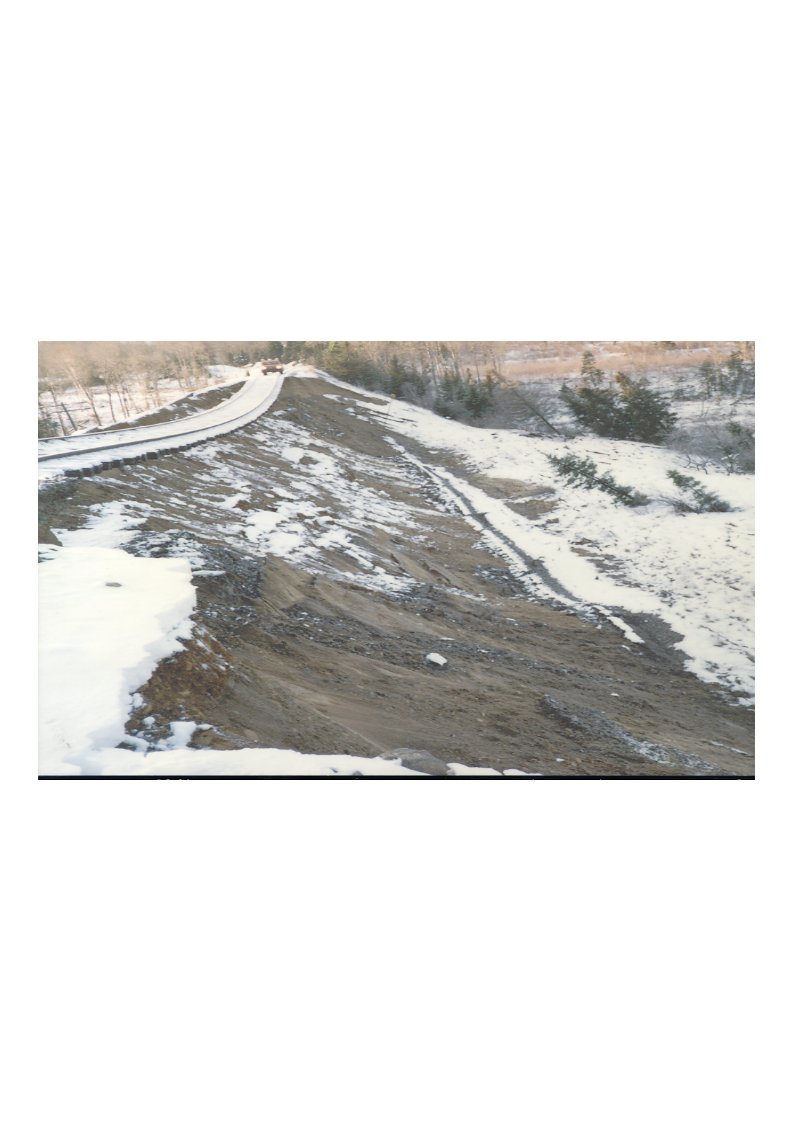
After Geotechnology for Railroaders Program, Module 7.3; §02, §05–06. Full reference under Supplemental References.