
Geotechnical engineering libraryContact
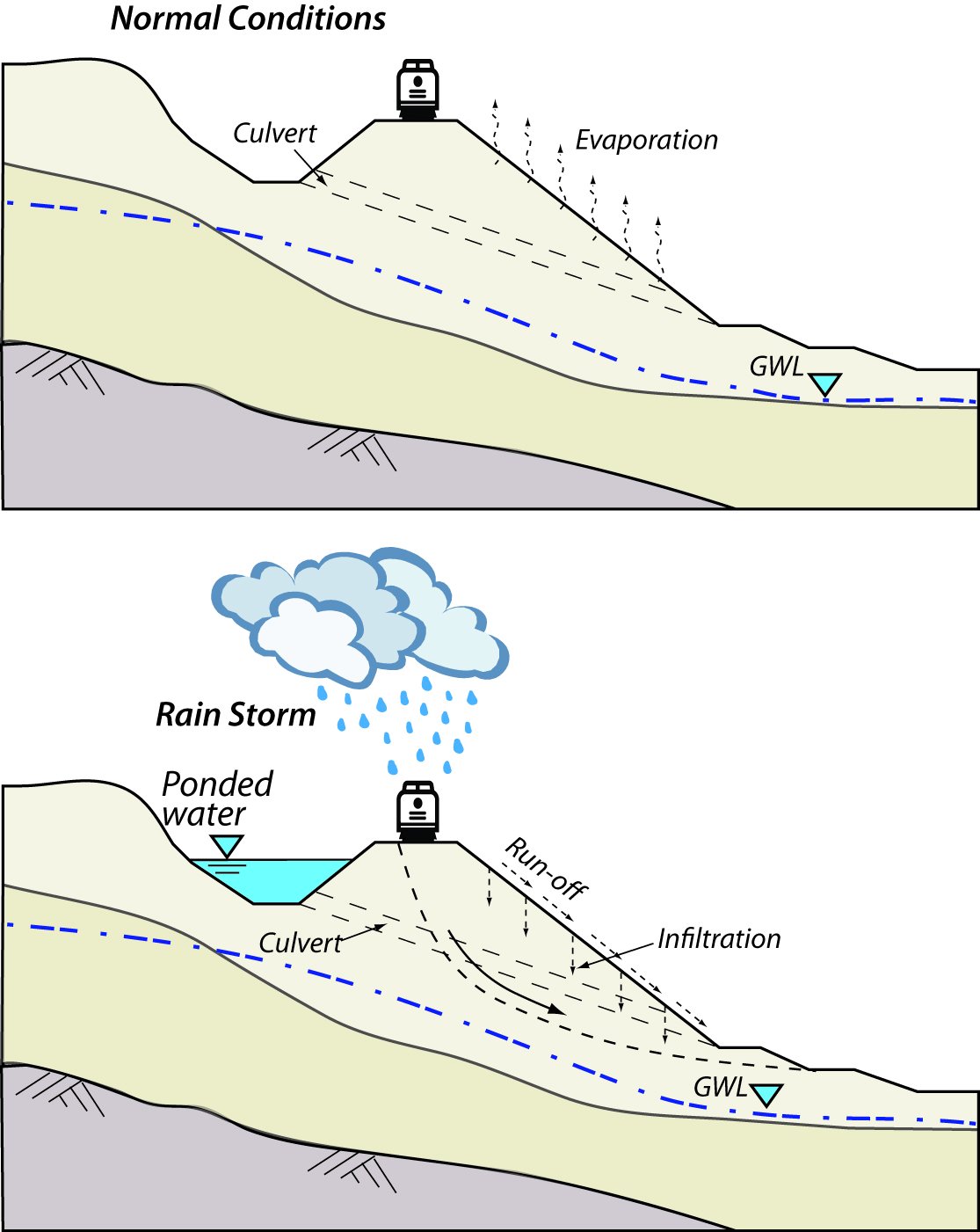
Because rainfall is the dominant trigger, many railroads tie patrols, speed restrictions and special inspections to precipitation. FRA 49 CFR 213.239 requires special inspections of track after events such as floods and severe storms that may have damaged track structure. A threshold-based protocol makes that requirement predictable.
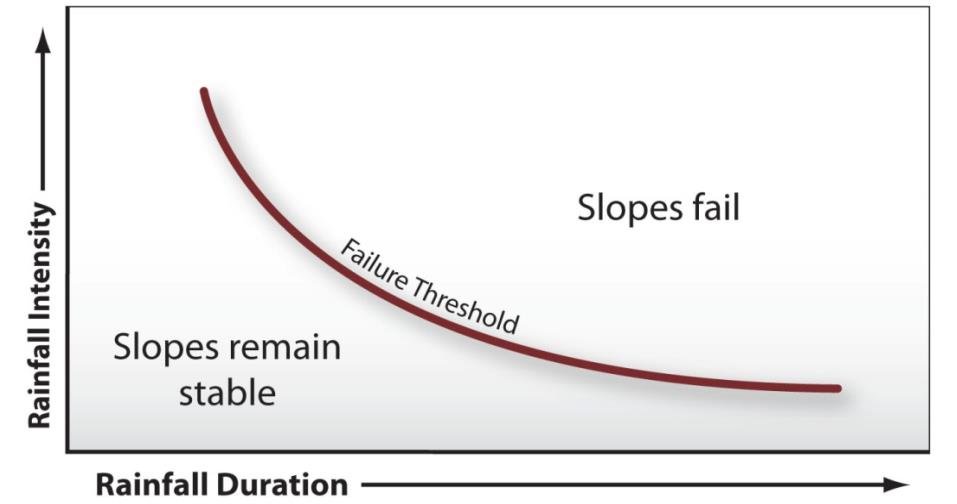
Empirical rainfall thresholds relate the average intensity I needed to trigger shallow landslides and debris flows to the storm duration D. The widely cited global lower-bound threshold of Caine (1980) is:
Equation 3.8-18: I = 0.58 × D−0.39
where I = rainfall intensity (in./hr) and D = duration (hr), valid for roughly 10 minutes to 10 days.
A global threshold is only a starting point. Thresholds should be calibrated for each territory from the railroad's own incident history and rain-gauge records. They should also account for antecedent moisture, since the same storm is far more damaging on saturated ground.
Values from these correlations are estimates, not test results. State the equation ID and source when one is used, confirm the soil or rock is within its range, and calibrate against site testing before design.
In the course’s Class I practice, the Regional Chief Engineer declares an extreme weather event for a defined subdivision and mile range. The declaration draws on weather-service forecasts and warnings and on reports from train crews and engineering forces, and is passed to Rail Traffic Control, the General Manager and the Regional Senior VP. Restrictions are decided jointly. They weigh the nature of the event, pre-existing ground conditions, topography and incident history, the quality of the weather information, the recency of patrols (a daylight inspection within four hours counts for more than a night inspection twelve hours old), train frequency, and wayside protection such as slide fences and high-water detectors.
The flash-flood trigger used across the Prairies and East is more than 1 in./h totaling over 3 in.; elsewhere, 2 in. in 1 h, 3 in. in 2 h, 4 in. in 4 h or 6 in. in 12 h. A double precipitation index plots short-term intensity against cumulative rainfall to define low-risk, speed-restriction and suspension zones. An antecedent rainfall index plots 2-day against 28-day totals over the history of past landslides at a station. In spring, bearing capacity can drop 30–50%.
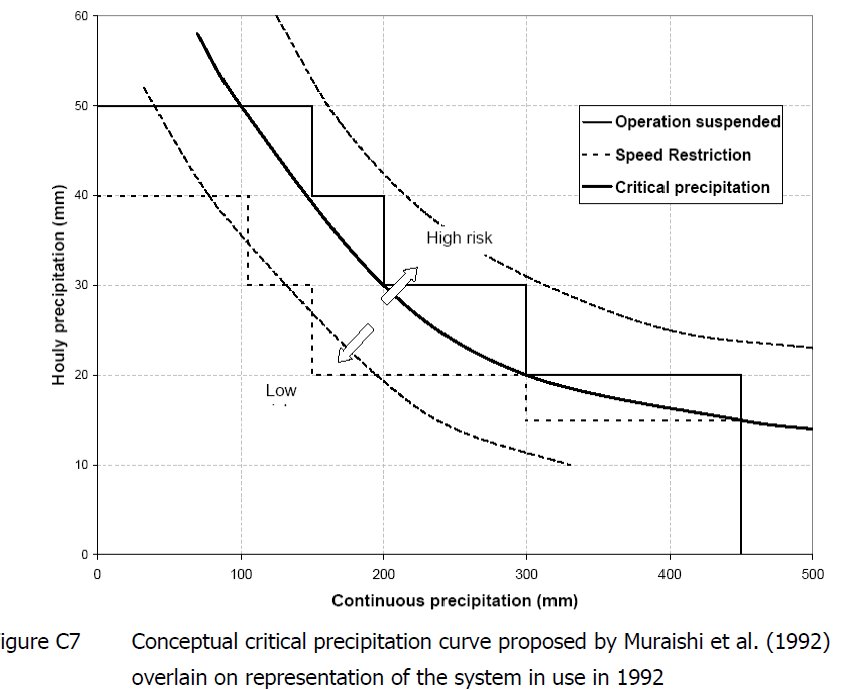
After Geotechnology for Railroaders Program, Module 7.2, Module 7.1, Module 4; Module 7.2 §03–06; Module 7.1 §07. Full reference under Supplemental References.