
Geotechnical engineering libraryContact
| Test | Siding/Track Ext. | Intermodal Yard | Bridge/Culvert | Mainline Rehab | Emergency |
|---|---|---|---|---|---|
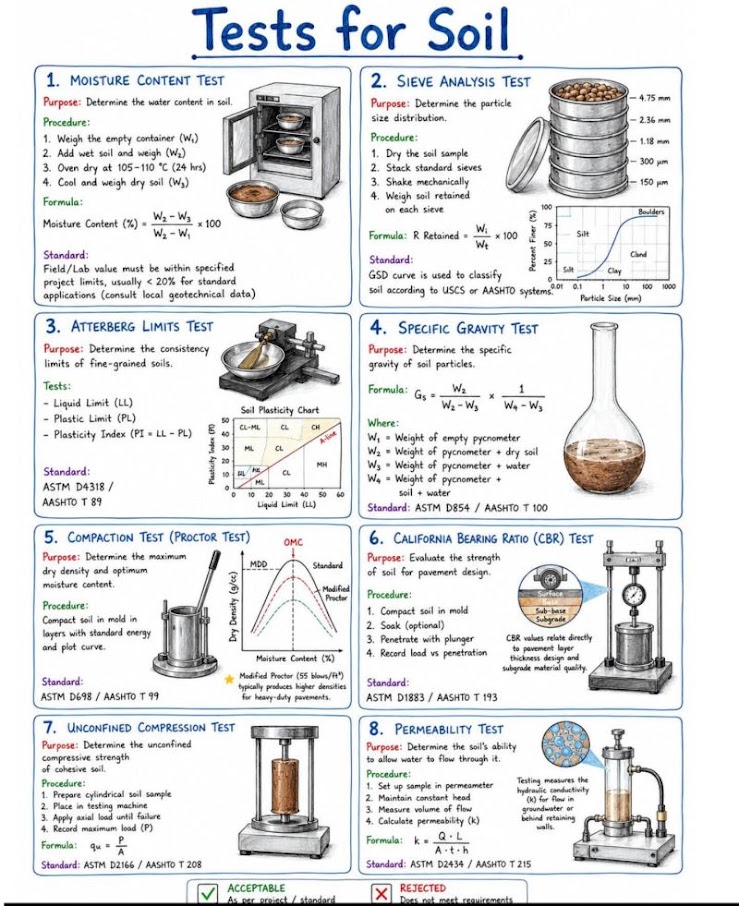
| Moisture content (D2216) | All samples | All samples | All samples | All samples | All samples |
| Atterberg limits (D4318) | Fine-grained | Fine-grained | Fine-grained | Fine-grained | Fine-grained |
| Grain size (D6913/D7928) | Select | Select | Select | Select | Priority |
| Specific gravity (D854) | Consolidation set | All triaxial set | All triaxial set | Consolidation set | Priority |
| Standard Proctor (D698) | Structure backfill | As needed | Structure backfill | As needed | Not typically |
| Modified Proctor (D1557) | Embankment | Yes | Embankment | Yes | Not typically |
| CBR (D1883) | Subgrade | Pavement design | Not typically | Subgrade rehab | Not typically |
| Resilient Modulus (T307) | Subgrade | Pavement design | Not typically | Subgrade rehab | Not typically |
| Consolidation (D2435) | Soft clay | Soft clay | Soft clay | Soft clay | Not typically |
| UU Triaxial (D2850) | Not typically | Slope stability | Slope stability | Slope stability | Quick stability |
| CU Triaxial (D4767) | Not typically | Critical slopes | Critical slopes | Critical slopes | Not typically |
| Direct shear (D3080) | Not typically | Residual φ' | Rock joints | Residual φ' | Not typically |
| Unconfined compression (D2166) | Not typically | Select | Select | Select | Quick s_u |
| Permeability (D2434/D5084) | Drainage design | Drainage design | Drainage design | Drainage design | Not typically |
| Point load index (D5731) | Rock cuts | Rock cuts | Rock cuts | Rock cuts | Not typically |
| Sodium sulfate soundness | Ballast | Ballast | Not typically | Ballast rehab | Not typically |
| LA Abrasion (C131) | Ballast | Ballast | Not typically | Ballast rehab | Not typically |
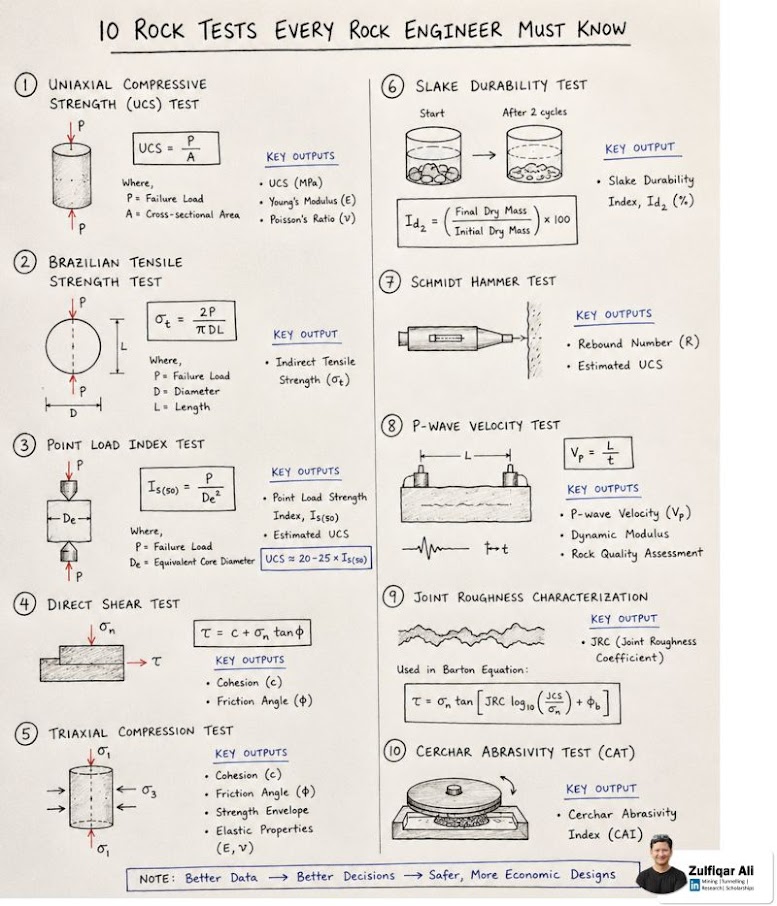
For ballast-source qualification, ballast condition surveys and subballast design, add the following to the soil program:
After Selig & Waters (1994), chs. 7, 8 and 9. Full reference under Supplemental References.
Values from these correlations are estimates, not test results. State the equation ID and source when one is used, confirm the soil or rock is within its range, and calibrate against site testing before design.