
Geotechnical engineering libraryContact
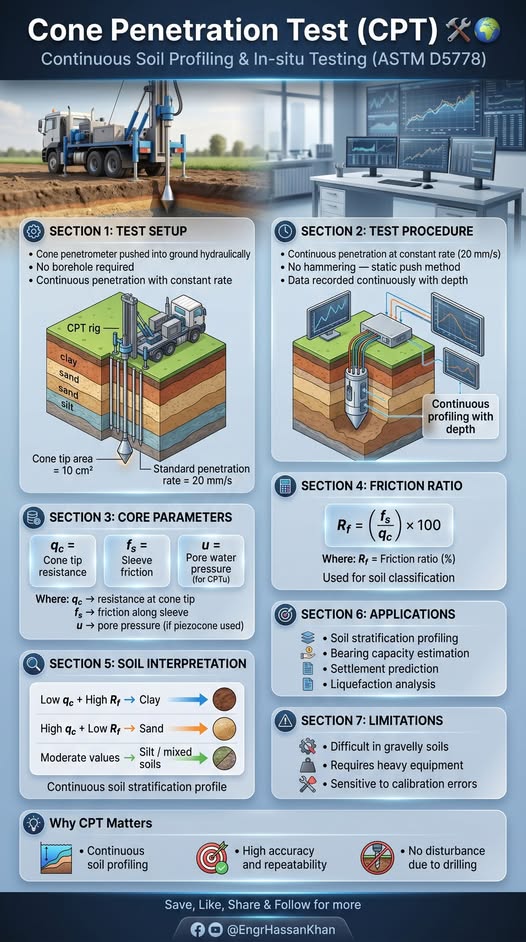
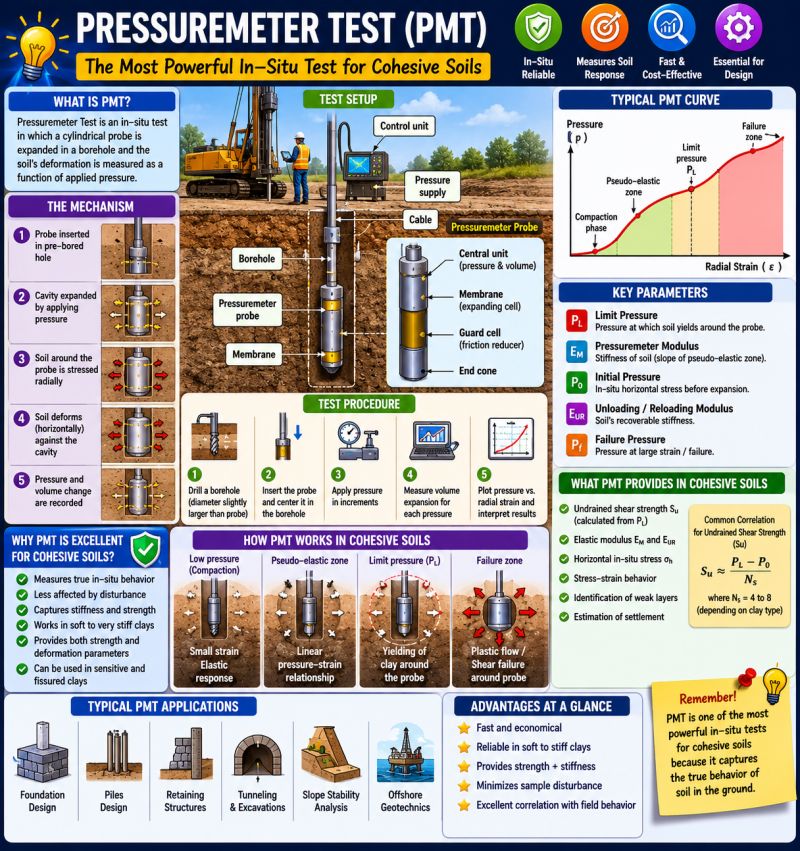
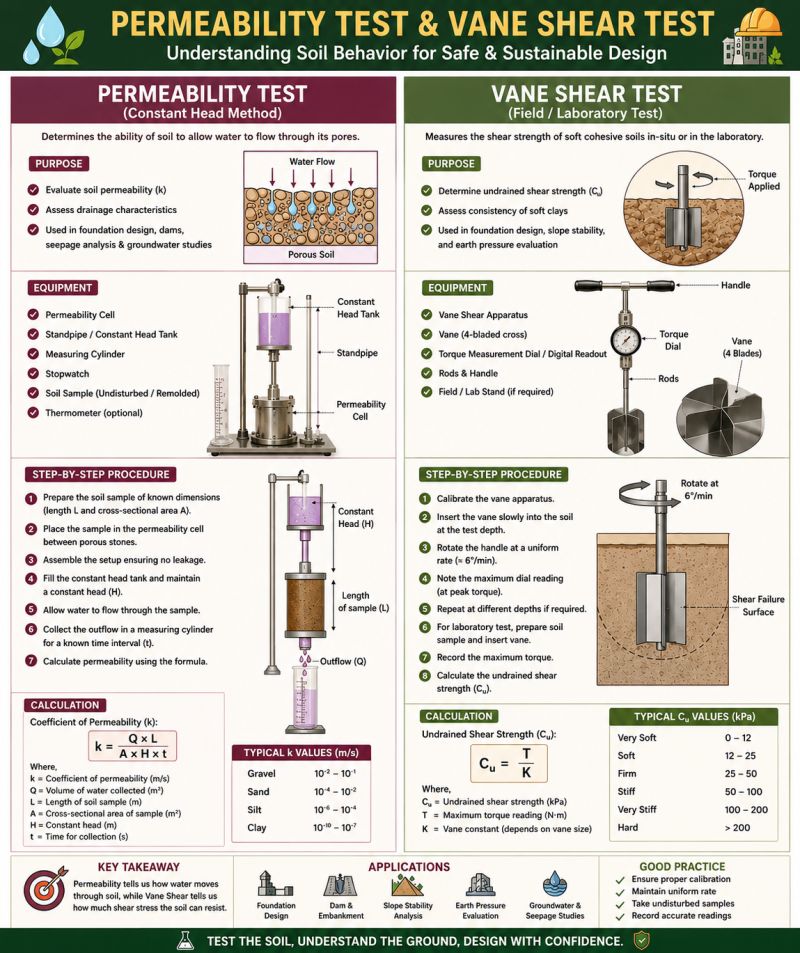
In situ testing measures soil and rock properties in the ground, without the disturbance that comes with sampling and laboratory testing, and usually gives a continuous or closely spaced profile with depth. This chapter opens with an in situ test catalogue (Section 5.1.0) that describes every test used on railroad work in the same way: what the test is, what information it provides, how that information is used in design and risk assessment, and where it can mislead. The catalogue covers penetration tests (SPT, CPT and CPTu, seismic cone, DCP, Becker), strength and stiffness tests (field vane, pressuremeter, dilatometer, borehole shear, plate load and LWD, pocket penetrometer and Torvane), groundwater and hydraulic conductivity tests (piezometers, slug, packer, pumping and infiltration tests), field rock tests (point load, Schmidt hammer, televiewer, borehole jack), geophysical methods (MASW, seismic refraction, downhole and crosshole, resistivity, GPR, microgravity) and field density tests. Sections 5.1.2 to 5.1.7 and 5.1.15 then give the theory, equations and interpretation of the CPT, vane, pressuremeter, dilatometer, MASW, seismic refraction and GPR in English units, followed by a method comparison, four worked examples, a field operations checklist and practice questions. The SPT procedure and corrections are in Chapter 4.1. Results feed Chapter 2.2 (classification), Chapter 6.1 (bearing capacity), Chapter 6.2 (settlement), Chapter 6.3 (slope stability), Chapter 6.5 (seismic and liquefaction) and the risk ratings in Chapter 3.8.
Values from these correlations are estimates, not test results. State the equation ID and source when one is used, confirm the soil or rock is within its range, and calibrate against site testing before design.