Geotechnical engineering library
Contact
Home
GHRM
LEVI
↑ Parent Menu
⌂ Main Menu
← Chapter 7.2 Ground Improvement Methods
GHRM
Railway Ground Hazard Risk Management · 7.0 · Design
Sections · click a car to open it
7.2.11 Reference Photographs
Ground improvement is a fundamental tool in the railroad geotechnical consultant's toolkit, employed when in-situ subgrade conditions cannot support track, structure, or…
Authors:
Daniel P. Colwell
and
Mario Ruel
7.2.0 Executive Summary
Empirical Equations — Use and Limitations
7.2.1 Background and Railroad Context
7.2.2 Compaction Methods
7.2.3 Prefabricated Vertical Drains (PVDs) with Staged Loading
7.2.4 Stone Columns
7.2.5 Deep Soil Mixing (DSM)
7.2.6 Grouting Methods
7.2.7 Lime and Cement Stabilization
7.2.8 Geosynthetic Reinforcement
7.2.9 Worked Examples
7.2.10 Representative Data Table
7.2.11 Reference Photographs
7.2.12 Practical Recommendations
7.2.13 Ground Improvement Checklist
7.2.14 Practice Questions
7.2.15 Cross-References
7.2.16 Ground Improvement Technology Library
7.2.17 Case Studies
7.2.18 Research to Practice: Findings for Railroad Ground Improvement
7.2.19 Thermal Methods: Ground Freezing and Heat Treatment
Author and Sources
Supplemental References
← 7.2.10 Representative Data Table
Chapter 7.2 landing page
Full chapter
7.2.12 Practical Recommendations →
7.2.11 Reference Photographs
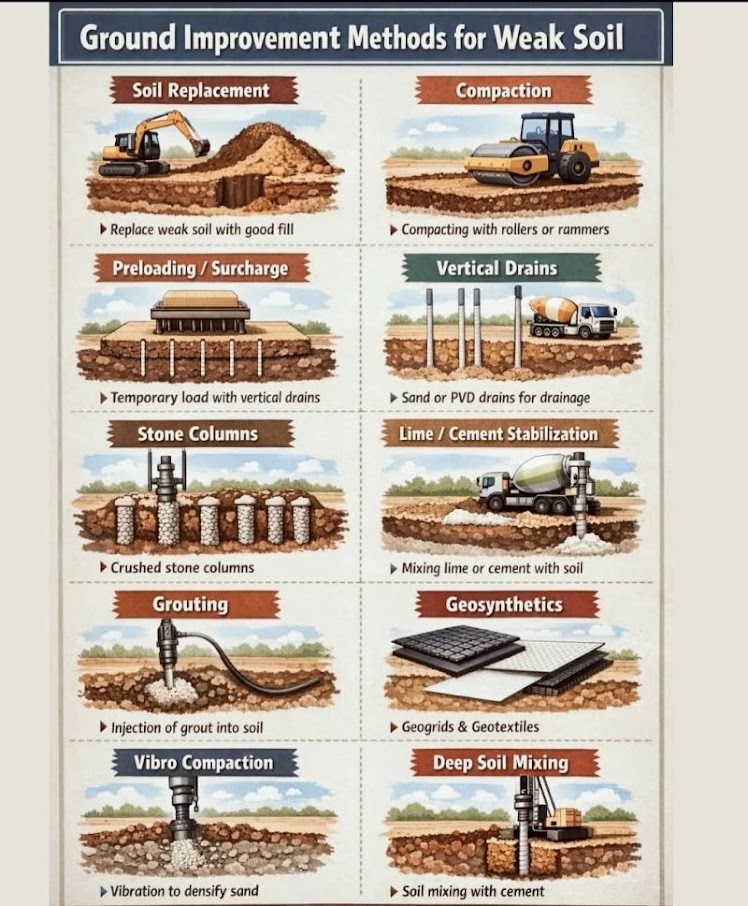
Ground Improvement Methods
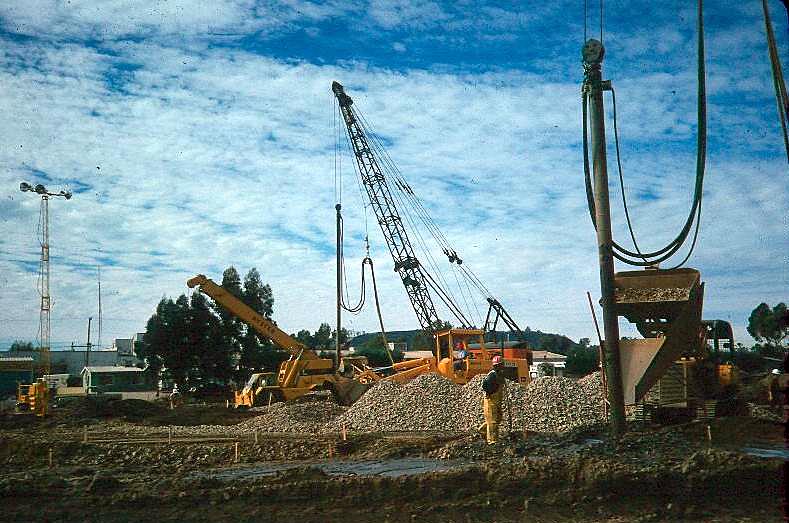
Stone column construction with vibro rigs
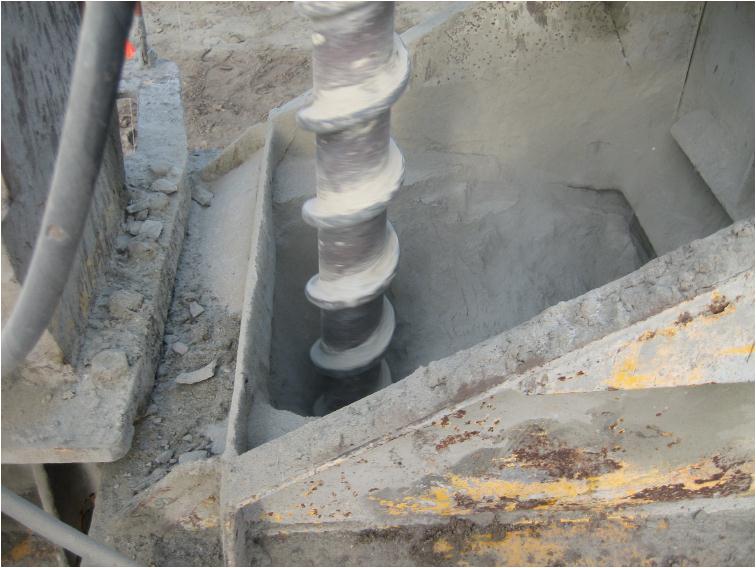
Cement-soil column auger and cement hopper
Proctor Compaction Test
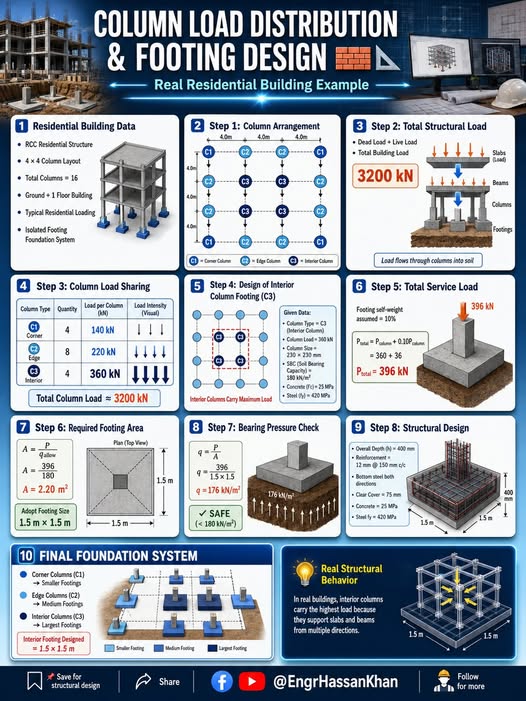
Column Load Distribution
← 7.2.10 Representative Data Table
Chapter 7.2 landing page
Full chapter
7.2.12 Practical Recommendations →
← Previous · 7.0 Design
Chapter 7.1 — Retaining Structures
Next · 7.0 Design →
Chapter 7.3 — Pavement Subgrade Evaluation
×
Click image to zoom · Esc to close
Image could not be loaded.
‹
−
100%
+
Fit
1:1
›
×
Scroll or pinch to zoom · drag to pan · double-click to zoom in/out · arrow keys pan when zoomed