
Geotechnical engineering libraryContact
Field case studies by Burt G. Look, from Earthworks: Theory to Practice – Design and Construction (CRC Press/Balkema, 2023), chosen for this chapter’s topics. Each is summarized from the book with its key figures and a closing note on railroad application added by the authors of this manual. Credit for the case material belongs to Look; see item S10 under Supplemental References.
Related section: 6.3.8 Rapid Drawdown Analysis
Look and Thorley (2011) studied riverbank failures in Brisbane during the 2011 floods. The annual probability of flood-induced riverbank failure was 2.7 × 10⁻³, with a further 1.25 × 10⁻³ for erosion-related failures. Because the floods submerged much of the alluvial bank, drawdown failures should recur at a similar rate with each comparable event. No deaths or injuries came from riverbank failures in 2011, or in the comparable 1974 flood.
The mechanism was sudden drawdown after the flood peak: excess pore pressure remained in the bank while strength softened, so the failure line fell as the load rose.
A practical lesson came from the council’s lead engineer. Traffic was stopped on the six-lane road along the top of the banks to unload the crest, and the emergency crews then parked their vehicles on the empty road, replacing moving traffic with static load.
For railroad work: the post-flood period is when river-bank and embankment-toe slides develop, so inspections should continue through the recession, not stop at the peak. If a crest is being unloaded, the instruction has to cover equipment staging, and train restrictions should not be replaced with parked work equipment.
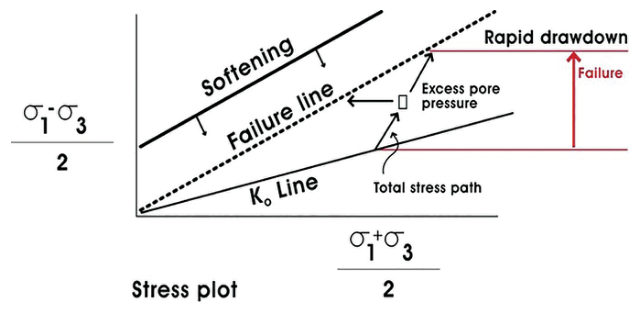
Source: Look, B. G. (2023). Earthworks: Theory to Practice – Design and Construction. CRC Press/Balkema. Case study §9.7, pp. 302–304. Summarized and paraphrased; figures reproduced for internal reference. Full reference under Supplemental References.