Geotechnical engineering library
Contact
Home
GHRM
LEVI
↑ Parent Menu
⌂ Main Menu
← Chapter 4.1 Borings and Sampling
GHRM
Railway Ground Hazard Risk Management · 4.0 · Subsurface Exploration
Sections · click a car to open it
4.1.9 Reference Photographs
Borings and sampling form the physical backbone of every geotechnical investigation we conduct for railroad clients.
Authors:
Daniel P. Colwell
and
Mario Ruel
Executive Summary
Empirical Equations — Use and Limitations
4.1.1 Background — Why Boring Quality Drives Railroad Deliverable Value
4.1.2 Drilling Method Selection
4.1.3 Standard Penetration Test (SPT) — Procedure and Corrections
4.1.4 Undisturbed Sampling — Shelby Tube and Piston Sampler
4.1.5 Rock Core Recovery and RQD
4.1.6 Worked Calculation Examples
4.1.7 Annotated Sample Boring Log
4.1.8 Representative Laboratory Data Table — Chapter 4.1 Samples
4.1.9 Reference Photographs
4.1.10 Practical Recommendations
4.1.11 Field Operations Checklist — Borings and Sampling
4.1.12 Cross-References
4.1.13 Practice Questions — Chapter 4.1
4.1.14 Case Studies
4.1.15 Boring Programs for Track Widening and New Track
4.1.16 Sample Disturbance: Sampler Geometry and Recovery
4.1.17 Rock Core Logging: Recovery, RQD and First Estimates of Rock Properties
Author and Sources
Supplemental References
← 4.1.8 Representative Laboratory Data Table — Chapter 4.1 Samples
Chapter 4.1 landing page
Full chapter
4.1.10 Practical Recommendations →
4.1.9 Reference Photographs
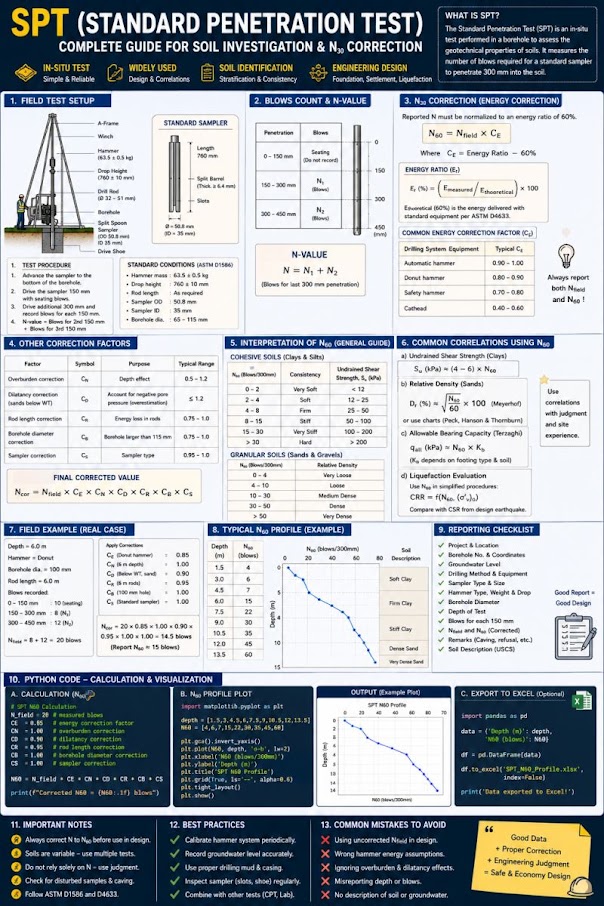
Standard Penetration Test
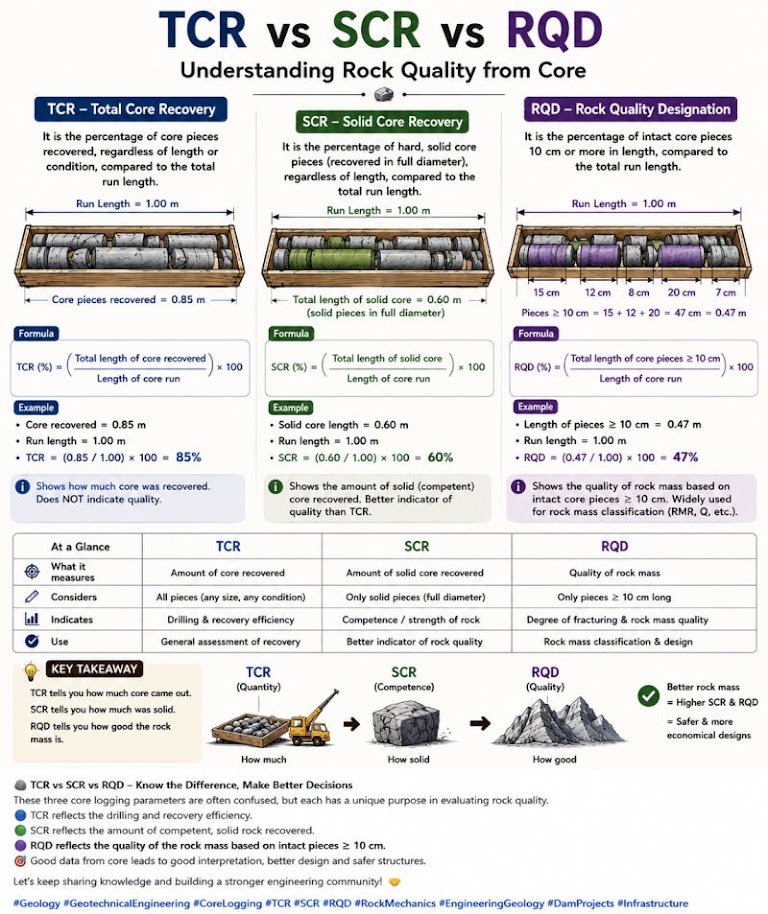
TCR vs SCR vs RQD
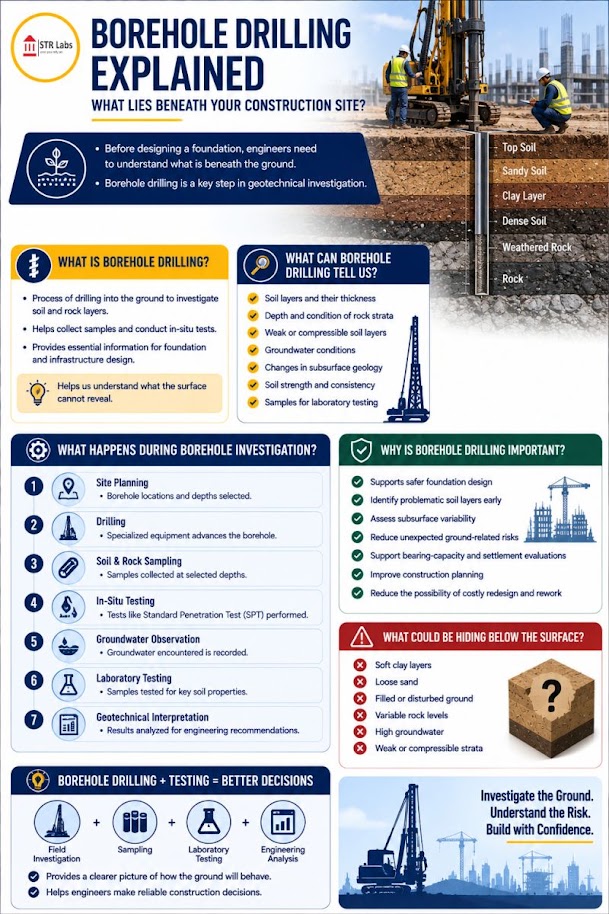
BOREHOLE DRILLING EXPLAINED
← 4.1.8 Representative Laboratory Data Table — Chapter 4.1 Samples
Chapter 4.1 landing page
Full chapter
4.1.10 Practical Recommendations →
← Previous · 3.0 Risk Management
Chapter 3.10 — Mining and Man-Made Hazards
Next · 5.0 Testing →
Chapter 5.1 — In Situ Testing
×
Click image to zoom · Esc to close
Image could not be loaded.
‹
−
100%
+
Fit
1:1
›
×
Scroll or pinch to zoom · drag to pan · double-click to zoom in/out · arrow keys pan when zoomed