
Geotechnical engineering libraryContact
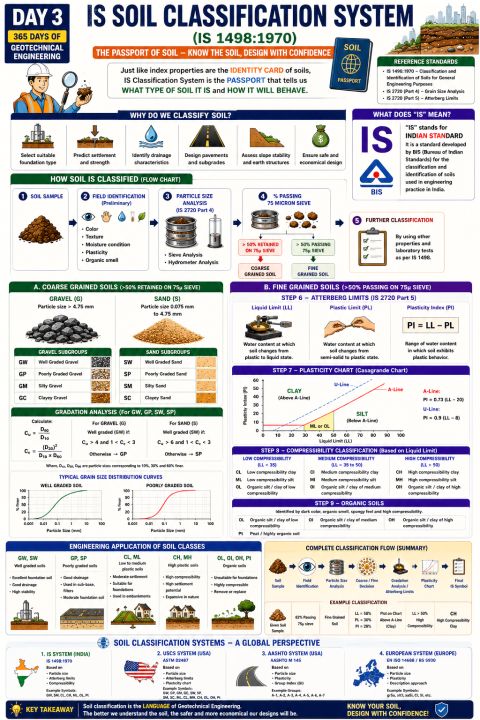
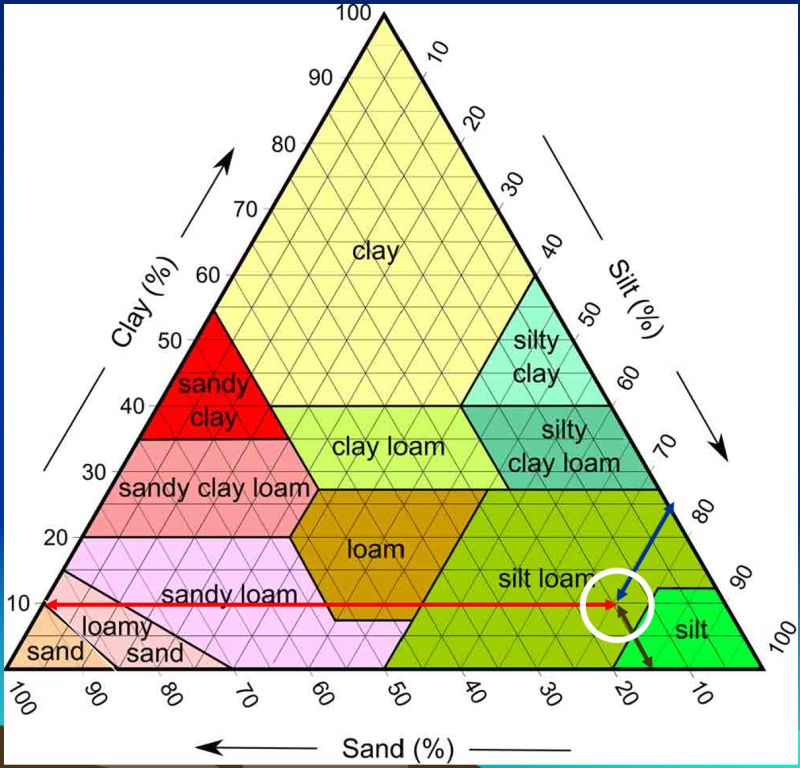
Consistent, reproducible classification of soil and rock is the common language shared between field personnel, laboratory technicians, design engineers, and railroad client reviewers. Every boring log, lab report, and geotechnical analysis submitted to Class I railroad subsidiaries relies on a classification framework that is traceable to recognized standards — principally the Unified Soil Classification System (USCS, ASTM D2487) for soils, AASHTO M 145 for pavement subgrade classification, and quantitative rock quality indices (RQD, Rock Mass Rating, and Geological Strength Index) for rock. AREMA MRE Chapter 1 references the USCS (ASTM D2487) for railroad earthwork, and AASHTO M 145 is widely used for subgrade evaluation. This chapter presents the full classification methodology for soils and rock in railroad project contexts, including Atterberg limit interpretation, gradation analysis, RQD (Chapter 4.1 cross-reference), RMR, and GSI. Three worked examples drawn from Class I railroad projects illustrate the classification process end-to-end. A representative data table, figure placeholders, practical recommendations, a field and lab checklist, and five practice questions with complete answers follow.
Values from these correlations are estimates, not test results. State the equation ID and source when one is used, confirm the soil or rock is within its range, and calibrate against site testing before design.