
Geotechnical engineering libraryContact
Cuts expose natural ground at formation level, where it is subject to groundwater seepage and repeated loading. Common issues:
Investigation in cuts should include borings or test pits at formation level. Also measure groundwater levels over time (Chapter 2.8), and test swell potential where the soil is plastic (ASTM D4546; ASTM D4829 for expansion index).
Before excavating a cut, study the geological formations along it, particularly the joint pattern (“diaclases”), so as to disturb the existing equilibrium as little as possible. Design should balance safety, cost and fit with the surrounding landscape. Commonly used cut slopes (horizontal : vertical) quoted by the book are:
| Material | Slope |
|---|---|
| Silt | 2.5–3 : 1 |
| Muddy (silty) sand | 2–3 : 1 |
| Gravel | 1.5–2 : 1 |
| Stable clay | 1–1.5 : 1 |
Indicative only. The governing slope comes from the site geotechnical study and the stability analysis in Chapter 6.3.
Protect cut slopes with shrubs or trees, which also blend the work into the landscape, and provide drainage on the slope to prevent softening.
After Profillidis (2014), §9.12.1; slope values after Bowles (2001). Full reference under Supplemental References.
Where the subgrade in a cut sits at or near the water table, seepage softens it and causes uneven settlement. Gravel trench drains, with or without perforated pipe, lower the table; sometimes a permeable sub-ballast layer is enough. In deep soil cuts, cutoff ditches or benches intercept slope runoff and control erosion that would otherwise fill the side ditches. Keep them at a 1–2% longitudinal slope so water moves without accumulating above the cut slope.
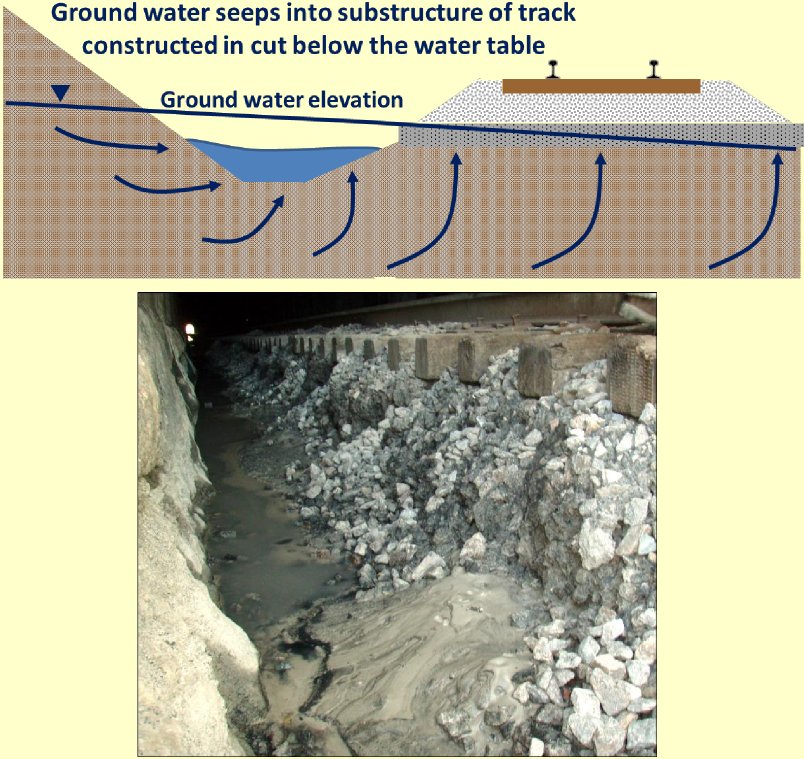
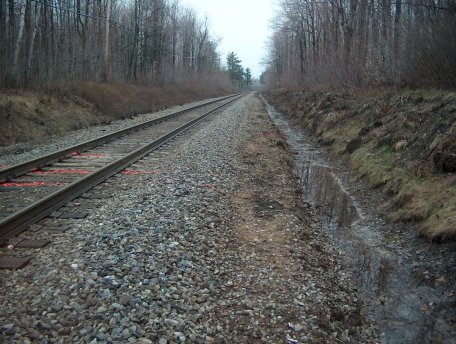
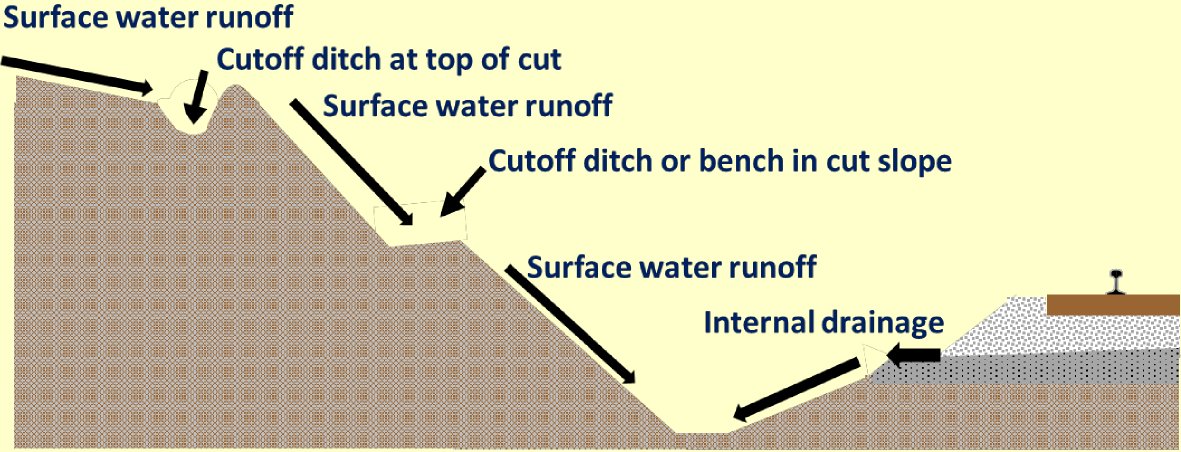
After Geotechnology for Railroaders Program, Module 4; §05, §07. Full reference under Supplemental References.
Case study: 2.1.16.2 Four materials in one 1,300 ft cutting (Look 2023), in §3.16 Case Studies.
Case study: 2.1.16.3 Earthworks tender assessment for a balanced cut-to-fill job (Look 2023), in §3.16 Case Studies.