
Geotechnical engineering libraryContact
Formerly Geo Rail Chapter 7.2 — Railway Geo-Hazard Risk Management
Step one of the R.M. process is identifying exactly what the potential hazards are: inventory every geo-natural event that can affect the track, then sort them into manageable main categories before considering the triggering perils (rainfall, snowmelt, freeze/thaw, seismic events) separately. Railway ground hazards divide first between landslides and hydraulic erosion, with subsidence hazards — limited to track-foundation failures specifically — forming a third category.
| Category | Representative Hazards | Typical Risk Rating |
|---|---|---|
| Landslide Hazards | Rock slide, debris flow, sensitive-clay slide/spread, downhill and uphill instability | High |
| Hydraulic Hazards | Surface (runoff) erosion, river flow & wave erosion, internal seepage erosion; washouts including beaver-related failures | Elevated |
| Subsidence Hazards | Ballast failure (mud spots), foundation failure, muskeg punching, frost heave, culvert failure, buried-timber decay, burrowing animals | Guarded |
Subsidence hazards make up roughly 80% of what track patrollers actually encounter day to day, even though landslide events tend to be the larger and more visually dramatic failures — a distinction worth internalizing, because it means routine patrol vigilance and dramatic-event response are two different disciplines that both need to be funded.
Within landslide hazards, following Cruden & Varnes (1996), the next distinction is by material type — rock, debris, earth, or granular versus cohesive/organic soil (including engineered fill) — crossed with movement type: fall, topple, slide, spread, or flow. Snow and ice classifications extend the same scheme to avalanche hazards. The non-cohesive/cohesive split matters because the two soil families fail by different mechanisms and under different triggers: non-cohesive materials are liquefaction-prone when saturated, while the notable exception on the cohesive side is the behavior of highly sensitive and quick clays, which can fail with very little precursor movement.
Within hydraulic erosion, the corresponding first split is between seepage erosion and surface-flow erosion, again because the failure characteristics and contributing factors differ significantly between the two mechanisms. The full inventory tracked under this category includes: surface flow (runoff) erosion, stream and wave erosion, underground (seepage) flow erosion, slope wash, gully erosion, piping, erosion around culverts, channel aggradation and degradation, local and contraction scour, ice/log-debris jams, bank erosion, encroachment, avulsion, flooding, and beaver dam failure.
Within subsidence, the governing distinction is behavioral rather than material: progressive settlement (consolidation, compression and active clays, subgrade dynamic liquefaction, subgrade bearing-capacity failure, ballast mud spots) versus sudden collapse (piping voids, culvert failure, failed buried pipelines/utilities, liquefaction, voids in buried rock fill, burrowing animals, tunnelling and mining subsidence, decay of buried timber, collapsing soils over subsurface cavities). Uneven track and a “muddy” surface condition can look identical regardless of which of these three or four root causes is actually responsible — diagnosing the true cause, not just treating the symptom, is essential before selecting a repair.
| Region | Terrain | Predominant threats |
|---|---|---|
| West | Mountains | Rock fall, debris flow, earth slides |
| South | Level terrain | Storms, hurricanes, floods, scour, earthquakes |
| East | Hills and level terrain | Washouts, earth slides, soft soils, coastal erosion |
| Central | Level terrain, glacial and lake-bed deposits | Floods, earth slides, silt–sand lake and river-delta deposits |
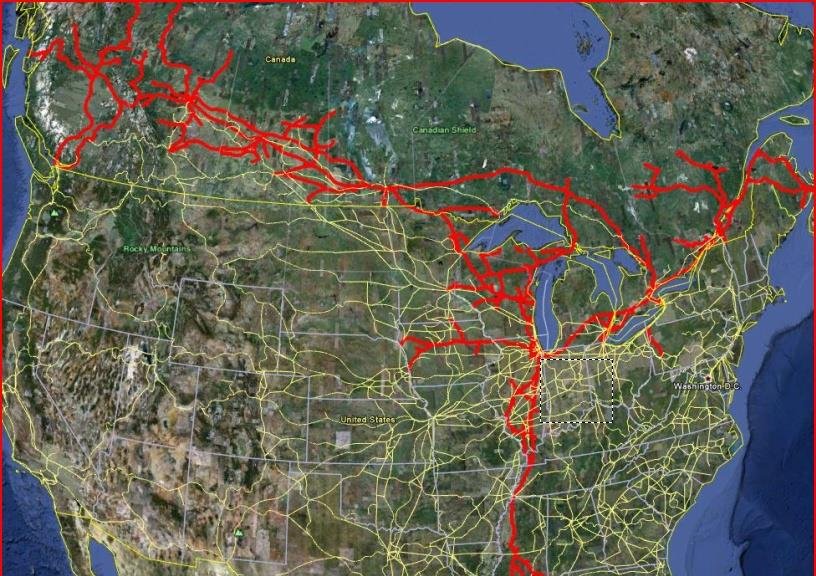
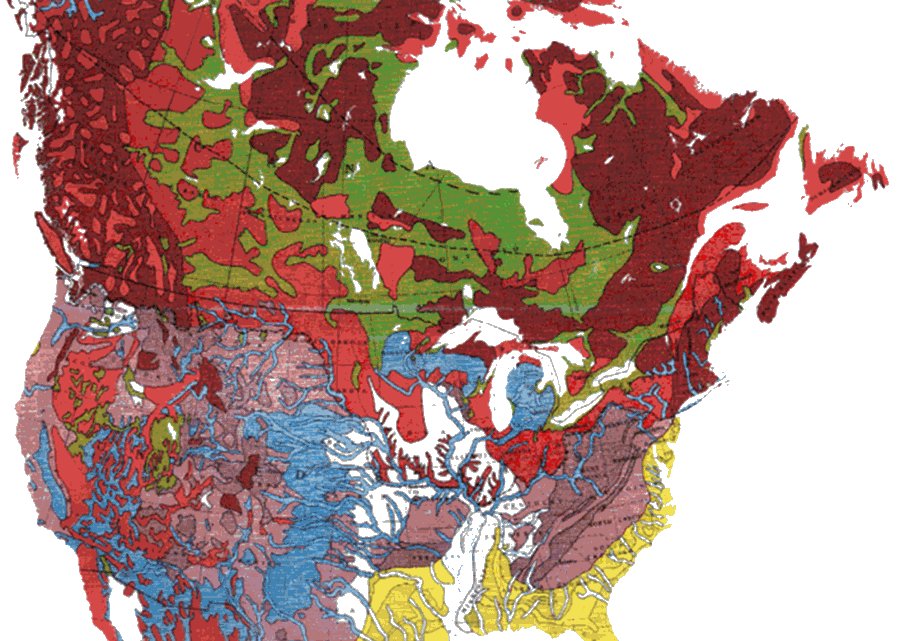
Terrain behavior traces back to how the ground was deposited. Glacial-lake clays and silty tills dominate the Prairies; coarser tills derived from volcanic and sedimentary rock dominate the Shield and the mountains. In the U.S., the Missouri, Ohio and Mississippi crossings bring their own flood and scour exposure. Subsidence hazards make up about 80% of what track patrollers actually encounter, even though landslides are the more spectacular events.
After Geotechnology for Railroaders Program, Module 1; §03, §05. Full reference under Supplemental References.