
↑ Parent Menu⌂ Main Menu
← Chapter 3.5 Site Conditions
GHRM
Railway Ground Hazard Risk Management · 3.0 · Risk Management
Sections · open a dropdown to go to a section or subsection

3.5.4 Climate, Vegetation and Frost

Describing the physical setting of a site (ground, water, structures and track) so that everyone working on it starts from the same picture.
Author: Daniel P. Colwell
3.5.4 Climate, Vegetation and Frost

Note what affects the work and the design: design frost depth, freeze-thaw cycling (rockfall, subgrade pumping), seasonal wetness, and vegetation. Vegetation matters twice: it controls access and clearing (Chapter 3.6), and it is evidence. Phragmites, cattails and reed canary grass mark wet ground; leaning trees mark creep; invasive thickets (buckthorn, bush honeysuckle) usually mean old disturbed fill.
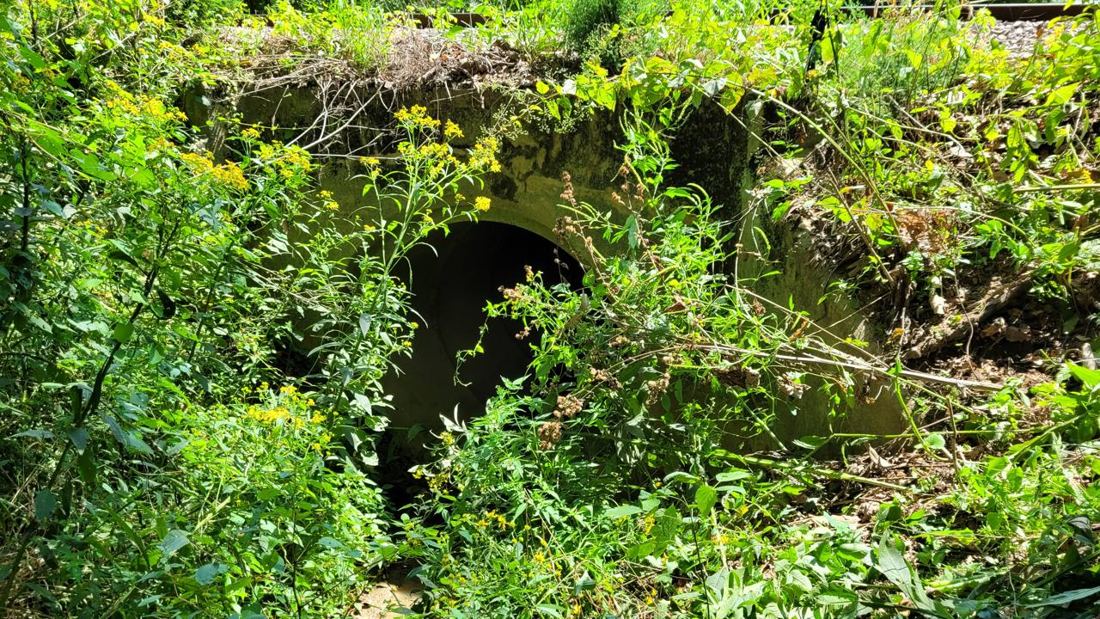
A masonry arch culvert almost hidden by summer growth. Seasonal vegetation can hide drainage structures and slope features; reconnaissance in late fall or winter sees more.
Figure 3.5-3. A masonry arch culvert almost hidden by summer growth. Seasonal vegetation can hide drainage structures and slope features; reconnaissance in late fall or winter sees more.
← Previous · 3.0 Risk Management Chapter 3.4 — Site Review and Reconnaissance
Next · 3.0 Risk Management → Chapter 3.6 — Site Accessibility Study